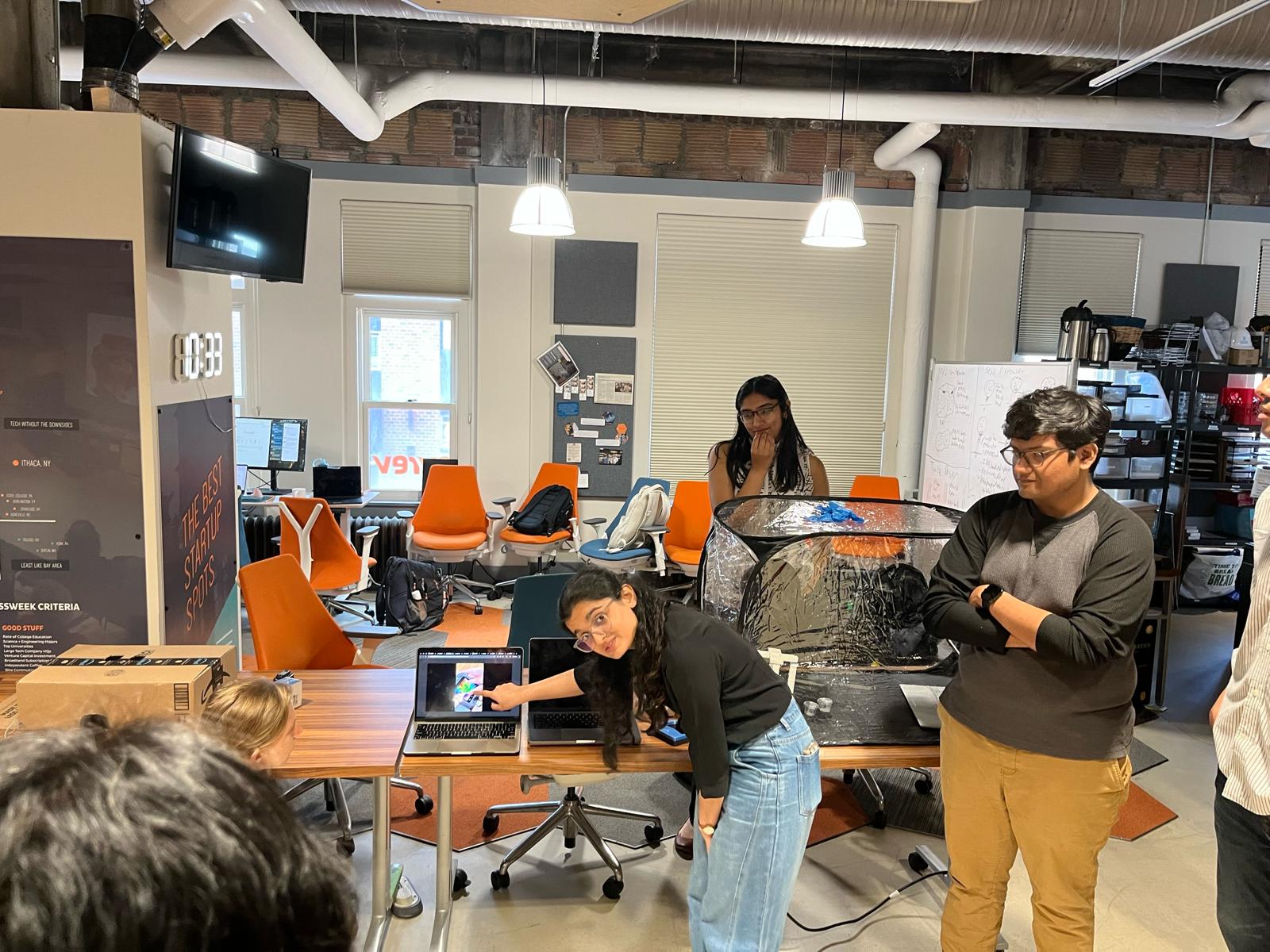





DeTICKtor didn't start in a boardroom. It started at a hackathon—a group of students at Cornell University who cared about animal health and saw a gap no one was filling. What began as a weekend project became a mission.
DeTICKtor is building a non-invasive screening device that helps animal caregivers detect ticks earlier, faster, and more reliably than manual inspection alone.
Ticks can transmit serious diseases to animals within hours of attachment. Yet for most caregivers, the only screening method available is a slow, manual inspection that often misses what it's looking for.
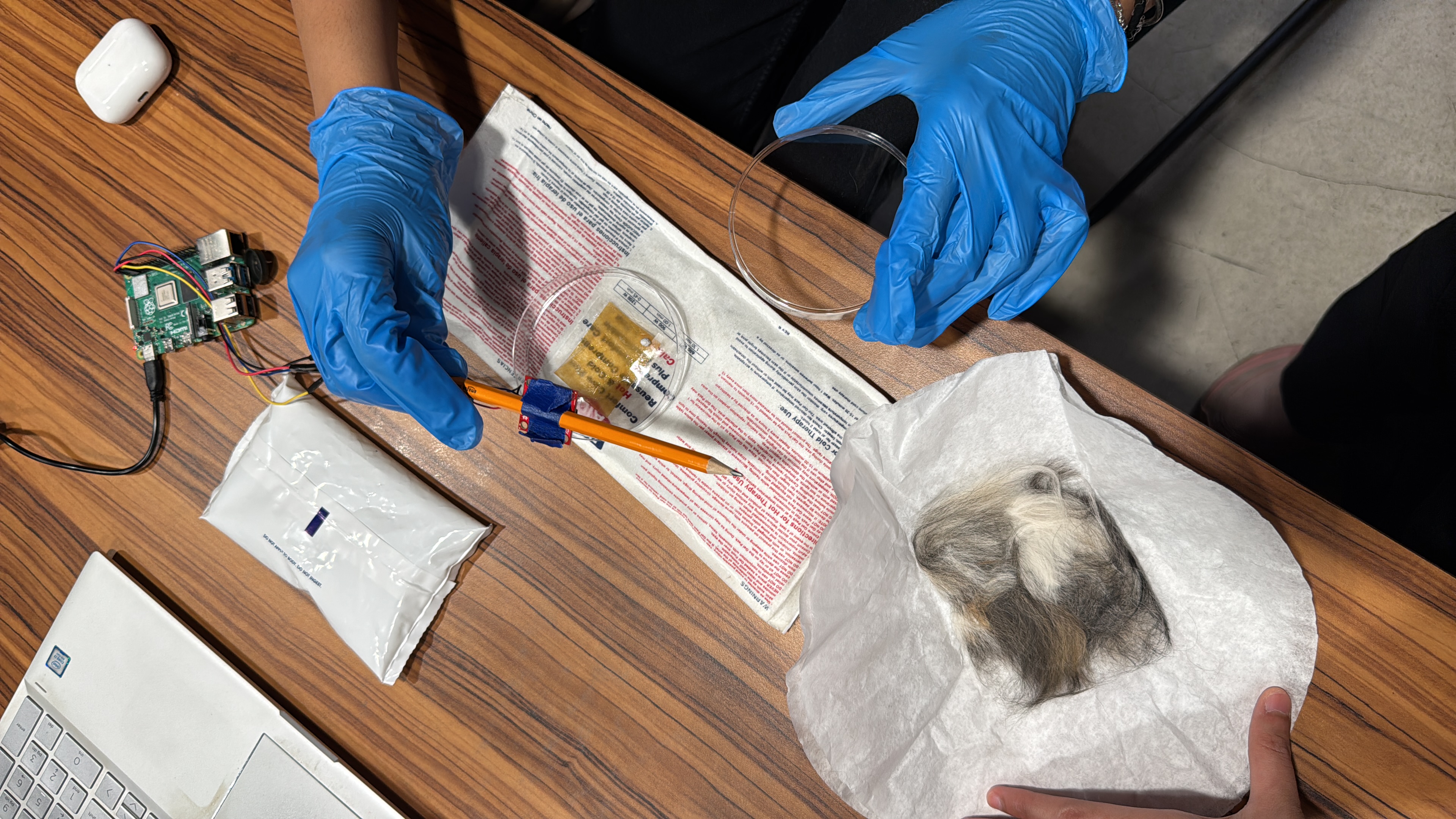
Ticks can be as small as a poppy seed. On dark-furred or thick-coated animals, visual inspection alone frequently fails—even for experienced caregivers.
Shelters handling dozens of animals each day simply don't have the time or staffing to perform thorough, hands-on tick checks for every animal that comes through intake.
Missed ticks can lead to tick-borne illnesses that affect the animal's health, complicate shelter operations, and increase the cost and complexity of care.
DeTICKtor is a handheld, non-invasive device designed to help identify the presence of ticks on an animal—without requiring sedation, shaving, or extensive handling.
It's not a replacement for veterinary judgment. It's a tool that gives caregivers faster, more consistent screening—so they can act sooner and with greater confidence.
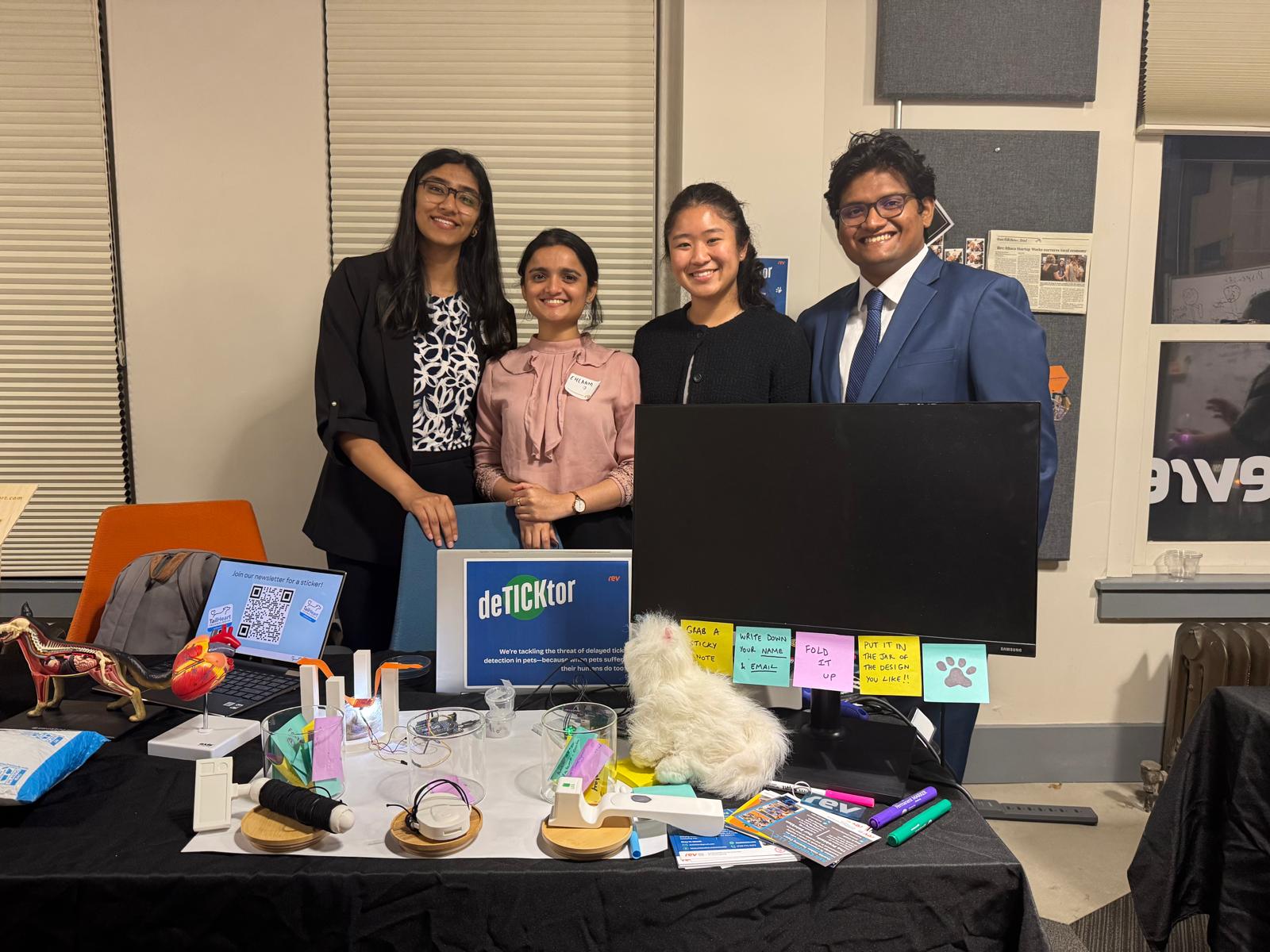
The team demonstrating an early prototype at Rev: Ithaca Startup Works
We're starting where the need is greatest—and where better screening can make the biggest difference.
High volume, limited time, high stakes. Shelters need reliable screening tools that can keep up with intake flow and protect every animal that walks through the door.
Professionals who handle animals daily and want an additional screening layer to catch what hands-on checks might miss.
A future opportunity for pet owners managing multiple animals who want peace of mind between vet visits. (Coming later.)
It started when Sahana's dog Simba kept coming home with ticks—and the worry that came with each one. She walked into the Cornell Animal Health Hackathon with an idea. By the end of that weekend, the five of us had become a team. That was over a year and a half ago. We haven't stopped since.
The one who started it all. Simba turned her into a tick-checking obsessive — and that obsession became DeTICKtor. Brings big-picture thinking and the drive that turns weekend ideas into companies.
Jumped in the moment she heard the pitch and didn't look back. Brings structure, strategy, and a sharp eye for what matters.
The detail-oriented one. If something needs to be precise, measured, and exactly right — Nilabha's already on it. Anchors the team's technical work.
The quickest thinker in the room — always ready with a creative angle no one else saw coming. Often the one pushing the boldest ideas forward.
The team's animal health expert. Brings the clinical knowledge that keeps DeTICKtor grounded in real veterinary needs.
DeTICKtor didn't start in a boardroom. It started at a hackathon—a group of students at Cornell University who cared about animal health and saw a gap no one was filling. What began as a weekend project became a mission.
Catching ticks earlier means intervening before disease transmission becomes likely—shifting from reactive treatment to proactive screening.
A purpose-built tool can screen animals more quickly and consistently than manual methods, freeing caregivers to focus on the animals that need them most.
A gentler screening process is better for the animal, easier on the caregiver, and creates a calmer environment—especially in busy shelter settings.
Coverage of DeTICKtor from Cornell University, Rev: Ithaca Startup Works, and across the hardware ecosystem.
DeTICKtor is in active development. If you're a shelter, caregiver, researcher, or just someone who cares about animal health—we'd love to keep you in the loop.
No spam. Just occasional updates on our progress.